Top 10 Engineering Tools Every Developer Needs in 2025
Published on Sep 07, 2025
Top 10 Engineering Tools Every Developer Needs in 2025
The landscape of software development is constantly evolving, making it crucial for developers to stay updated with the most efficient and powerful tools. Mastering the right set of engineering tools can significantly boost productivity, streamline workflows, and enable the creation of robust, scalable applications.
Core Development & Collaboration Essentials
In 2025, a developer's toolkit must include a strong foundation of development and collaboration tools that support efficient coding and team interaction.
-
Integrated Development Environments (IDEs) & Editors:
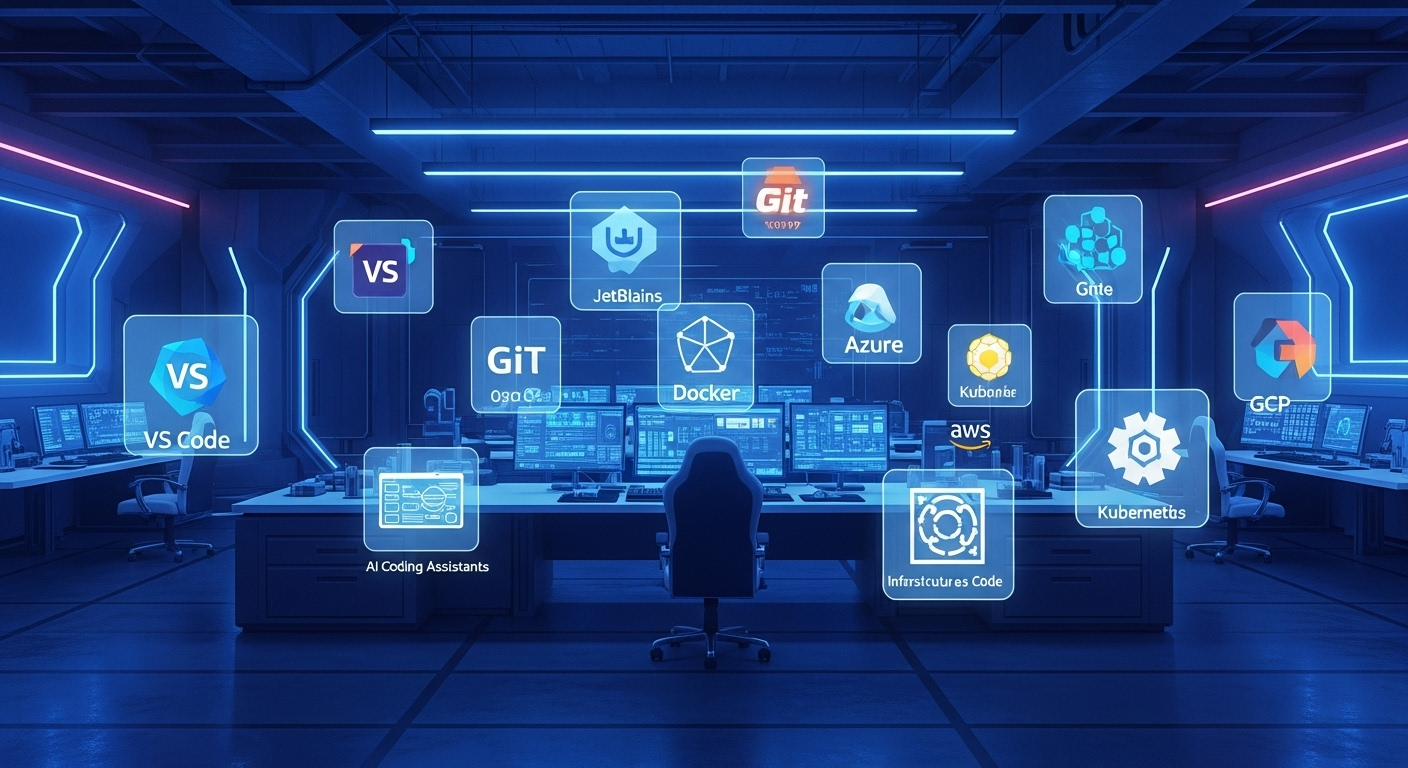
- VS Code: Continues to dominate with its vast extension ecosystem, excellent performance, and deep integration with cloud-native development. Expect even smarter AI-driven code completion and debugging. With features like Dev Containers, it's becoming the universal workbench.
- JetBrains IDEs (IntelliJ IDEA, PyCharm, Rider): Unmatched for specific language ecosystems, offering powerful refactoring, deep analysis, and excellent debugging capabilities. Fleet is gaining traction as a lightweight, distributed IDE.
-
Version Control Systems (VCS):
- Git: Remains the undisputed king. Proficiency in Git (branching, merging, rebasing) is non-negotiable. Platforms like GitHub, GitLab, and Bitbucket are essential for collaboration, code hosting, and CI/CD integration.
-
Containerization & Orchestration:
- Docker: Essential for creating isolated, reproducible development environments and packaging applications. Understanding Docker Compose for multi-container apps is a must.
- Kubernetes: While complex, basic understanding of Kubernetes (k8s) concepts and how to deploy applications to a cluster is becoming standard for modern backend and cloud developers. Tools like Minikube or Kind are great for local development.
-
Collaboration & Project Management:
- Jira/Linear/Asana: Critical for agile project management, bug tracking, and task allocation within engineering teams. Understanding how to manage your workflow and contribute effectively to project boards is key.
-
API Development & Testing:
- Postman/Insomnia: Indispensable for testing, documenting, and developing APIs. Advanced features like API mocking and test automation are powerful accelerators.
Advanced AI, Cloud-Native & Observability Tools
As AI becomes embedded in development and cloud-native architectures become standard, these tools are rising in prominence.
-
AI-Powered Coding Assistants:
- GitHub Copilot/Amazon CodeWhisperer/Tabnine: These tools are no longer novelties but productivity multipliers. They suggest code, complete functions, and even generate entire blocks of logic based on comments and context, significantly accelerating development.
-
Cloud Platform CLIs & SDKs (AWS, Azure, GCP):
- Direct interaction with cloud services via their respective Command Line Interfaces (CLIs) and Software Development Kits (SDKs) is fundamental for deploying, managing, and interacting with cloud resources. Knowledge of at least one major cloud provider is crucial.
-
CI/CD Pipelines:
- GitHub Actions/GitLab CI/CD/Jenkins: Automating the build, test, and deployment process is vital for rapid, reliable software delivery. Modern developers should be able to set up and maintain robust CI/CD pipelines.
-
Monitoring & Observability:
- Prometheus/Grafana/Datadog/New Relic: Understanding how to monitor application performance, track metrics, and analyze logs is critical for maintaining healthy, scalable systems. Tools like Prometheus and Grafana offer open-source power, while Datadog and New Relic provide comprehensive commercial solutions.
-
Infrastructure as Code (IaC):
- Terraform/Pulumi: Managing cloud infrastructure through code allows for reproducible, version-controlled deployments. Terraform remains a popular choice for provisioning infrastructure across multiple cloud providers, while Pulumi offers IaC using general-purpose programming languages.
Staying ahead in the fast-paced world of software engineering means continuously learning and adapting to new technologies. The tools listed above represent the core competencies and advanced enablers that will define a successful developer's toolkit in 2025. Embrace them, experiment with them, and watch your productivity soar.