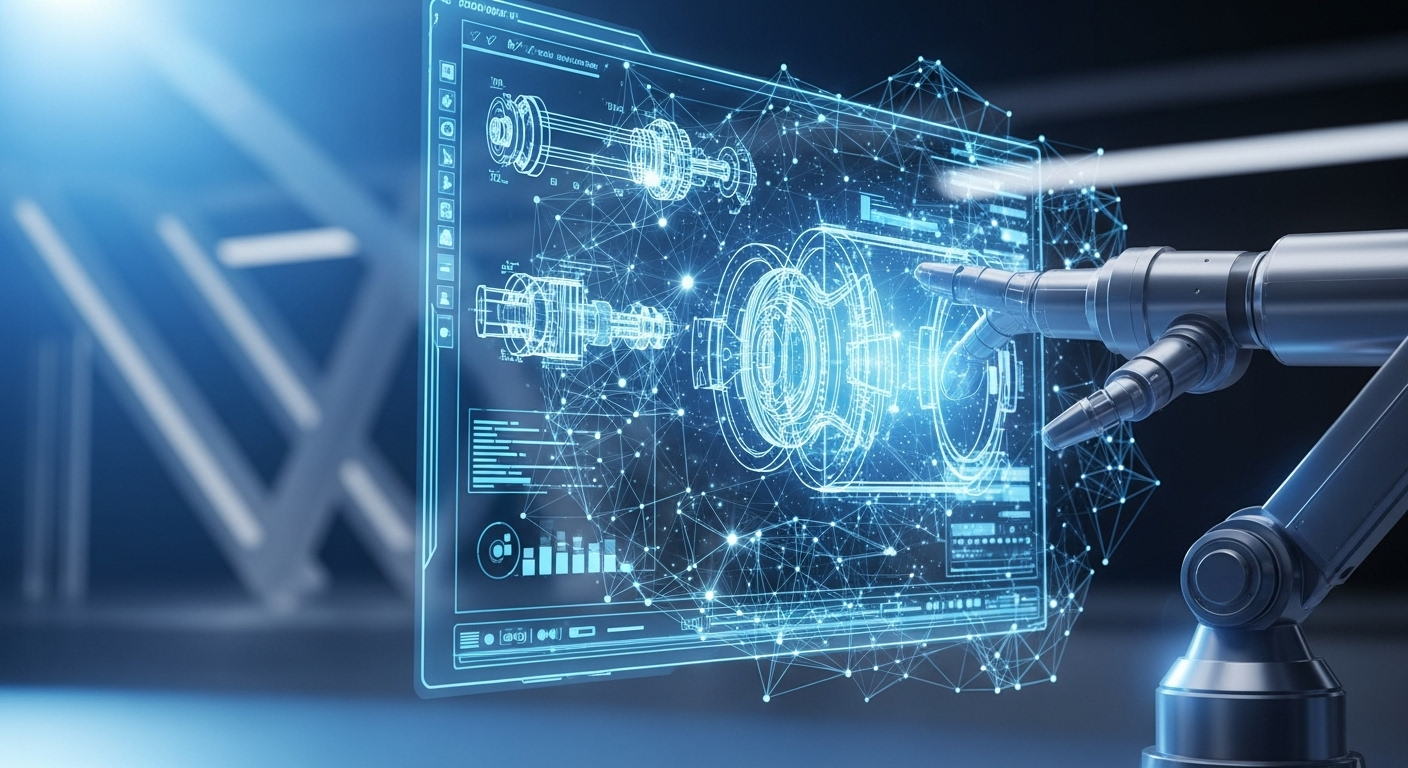
The AI-Powered Blueprint: Generative AI's Revolution in Mechanical Design
Published on Sep 07, 2025
The AI-Powered Blueprint: Generative AI's Revolution in Mechanical Design
The landscape of mechanical engineering is undergoing a profound transformation, driven by the emergence of generative artificial intelligence. No longer confined to iterative human-led design cycles, engineers are now leveraging AI to explore vast design spaces, uncover optimal solutions, and innovate at unprecedented speeds. This paradigm shift promises to redefine efficiency, performance, and creativity in product development.
Beyond Iteration: The Core of Generative Design
Generative design, powered by AI algorithms, is a computational process that automatically generates numerous design options based on a set of constraints and objectives defined by the engineer. Instead of designing a component from scratch, engineers specify parameters such as:
- Load requirements: How much force or stress the part needs to withstand.
- Material properties: The type of material and its characteristics (e.g., strength, weight).
- Manufacturing methods: Constraints related to 3D printing, CNC machining, or casting.
- Weight or cost targets: Specific goals for lightness or economic production.
The AI then explores millions of potential geometries, often producing organic, bionic forms that human designers might not conceive. This approach leads to:
- Optimized Performance: Designs that are inherently lighter, stronger, and more efficient.
- Material Reduction: Significant savings in raw materials through topology optimization.
- Novel Geometries: Unconventional shapes that unlock new functionalities and aesthetic possibilities.
Practical Applications and Future Horizons
Generative AI is already making significant inroads across various industries, demonstrating its practical value.
- Aerospace: Designing lighter, yet stronger, aircraft components like brackets and airfoils, leading to fuel efficiency and reduced operational costs.
- Automotive: Optimizing chassis components, internal structures, and aesthetic elements for improved safety, performance, and passenger comfort.
- Medical Devices: Crafting custom implants and prosthetic limbs that perfectly match patient anatomy and functional requirements.
- Consumer Goods: Innovating product designs for better ergonomics, aesthetics, and sustainability.
Looking ahead, the integration of generative AI with advanced simulation tools and automated manufacturing systems will create a fully autonomous design-to-production pipeline. We can anticipate even more sophisticated AI models capable of learning from real-world performance data, refining designs continuously, and even anticipating future market needs. The future of mechanical design is intelligent, adaptive, and endlessly creative.
Generative AI is not merely an incremental improvement; it's a fundamental shift in how mechanical design is conceived and executed. By empowering engineers with tools to explore boundless design possibilities and optimize for complex objectives, it's paving the way for a new era of innovation, efficiency, and sustainability in product development.